
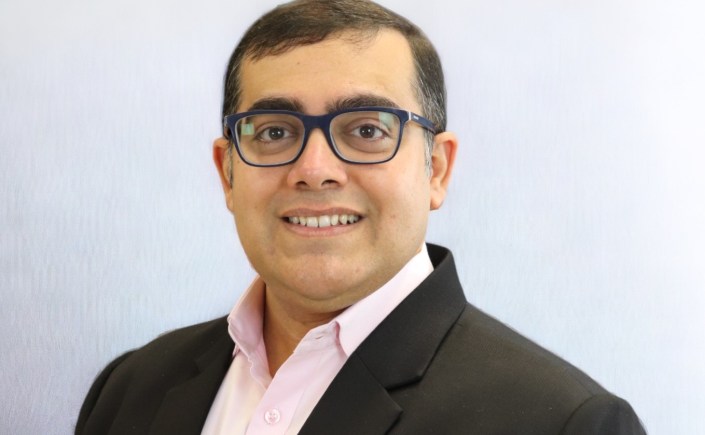
Mayank Rehani is a research associate and study coordinator in the BLINC Lab. He graduated with an MSc in Rehabilitation Science at the University of Alberta in 2013, after completing a BSc with Double Major in Biological Sciences and Psychology (Science) in 2008. He also completed the Project Management Certificate program at the Northern Alberta Institute of Technology in 2017 and has formal training in biostatistics. Currently, he is also a part-time PhD in Medicine student focusing on Health Outcomes Research.
His responsibilities include statistical analyses of several BLINC Lab projects, consulting with students and BLINC Lab investigators on the appropriate statistical tools and procedures for their studies, liaising with granting organizations and Research Services Office, aiding with research grant proposals including developing budgets and justification, acquiring Research Ethics Board approvals for BLINC Lab projects, ensuring that all areas of the BLINC Lab meet the Environment, Health and Safety standards at the University of Alberta, organizing the BLINC Lab Seminars, managing the knowledge translation and community outreach activities that the BLINC Lab undertakes, orienting new students and staff, and taking care of general administration needs of the BLINC Lab.
His research interests include osseointegration for lower- and upper-limb amputation, the embodiment of prosthetic devices, developing functional evaluation tools to quantify prosthetic performance, evidence synthesis, mixed methods, single-subject designs, and health economics.
Outside of the BLINC Lab, Mayank consults for Obesity Canada-Obésité Canada (formerly known as the Canadian Obesity Network-Réseau canadien en obésité) and wrote Canada’s first and second Report Card on Access to Obesity Treatment for Adults in 2017 and 2019. He also received the Innovation in Rehabilitation award at the 2013 Alberta Rehabilitation Awards.
Before the BLINC Lab, Mayank worked in the Glenrose Rehabilitation Hospital and managed research projects for the Department of Psychology, Faculty of Rehabilitation Medicine, Canadian Armed Forces, Alberta Correctional Services, Autism Research Centre, Medically At-Risk Driver Centre, and Obesity Canada.
Mayank enjoys collaborating with others and thrives in diverse and enthusiastic teams. Outside the lab, he enjoys tutoring Social Studies, Mathematics, and Biology to high school students, traveling, swimming, cooking, and playing the sitar.
In 2024, Mayank participated in the Images of Research competition at the University of Alberta. His image, Pensive echoes in the stillness of being, was one of the finalists. Details of the submitted image are available here.
In 2021, Mayank represented the BLINC Lab and was one of the finalists in the 3 Minute Thesis competition; you can see his presentation below:
Publications
Ravari R, Rehani M, Lewicke J, Vette AH, Hebert JS. (2026). Spatiotemporal and Gait Symmetry Changes Following Osseointegration in Transfemoral Prosthesis Users: A Longitudinal Study. Prosthesis. 8(3):33. DOI: https://doi.org/10.3390/prosthesis8030033.
Ravari R, Rehani M, Lewicke J, Vette AH, Hebert JS. (2025). Impact of marker placement on angular kinematics in transfemoral osseointegrated prosthesis users—A longitudinal case-series study. Gait & Posture. 121:166–172. DOI: https://doi.org/10.1016/j.gaitpost.2025.05.011.
Rehani M, Stafinski T, Round J, Jones CA, Hebert JS. (2024). Bone-anchored prostheses for transfemoral amputation: a systematic review of outcomes, complications, patient experiences, and cost-effectiveness. Frontiers in Rehabilitation Sciences. 5:1336042. DOI: https://doi.org/10.3389/fresc.2024.1336042.
Henderson E, Rehani M, Hebert JS. (2024). Sex and gender differences in upper extremity prosthesis rejection: A review of literature. Prosthetics and Orthotics International. 48(3):300–314. DOI: https://doi.org/10.1097/PXR.0000000000000330.
Ravari R, Rehani M, Hebert JS. (2023). Biomechanical characteristics of transfemoral bone-anchored prostheses during gait: A review of literature. Prosthetics and Orthotics International. 48(4):p 412–421. DOI: https://doi.org/10.1097/PXR.0000000000000263.
Cheng KY, Rehani M, Hebert JS. (2023). A scoping review of eye tracking metrics used to assess visuomotor behaviours of upper limb prosthesis users. Journal of NeuroEngineering and Rehabilitation. 20(1): 49. DOI: https://doi.org/10.1186/s12984-023-01180-1.
Rehani M, Jones CA, Round J, Hebert JS. (2022). Exploring health-related quality of life with bone-anchored prostheses in persons with transfemoral amputation [Abstract]. In 29th Annual Conference of the International Society for Quality of Life Research. Quality of Life Research. 31(Suppl. 2): S125–S126.
Hallworth BW, Austin JA, Williams HE, Rehani M, Shehata AW, Hebert JS. (2020). A Modular Adjustable Transhumeral Prosthetic Socket for Evaluating Myoelectric Control. IEEE Journal of Translational Engineering in Health and Medicine. 8: 1–10. DOI: https://doi.org/10.1109/JTEHM.2020.3006416.
Shehata AW, Rehani M, Jassat ZE, Hebert JS. (2020). Mechanotactile Sensory Feedback Improves Embodiment of a Prosthetic Hand. Frontiers in Neuroscience. 14: 263.
DOI: http://doi.org/10.3389/fnins.2020.00263.
Rehani M & Obesity Canada-Obésité Canada. Report Card on Access to Obesity Treatment for Adults in Canada 2019. Edmonton, AB: Obesity Canada Inc.; 2019, April. https://obesitycanada.ca/resources/report-card/
Hebert JS, Rehani M, Stiegelmar R. (2017). Osseointegration for Lower-Limb Amputation: A Systematic Review of Clinical Outcomes. JBJS Reviews. 5(10): e10. DOI: http://dx.doi.org/10.2106/JBJS.RVW.17.00037.
Rehani M & Canadian Obesity Network-Réseau canadien en obésité. Report Card on Access to Obesity Treatment for Adults in Canada 2017. Edmonton, AB: Canadian Obesity Network Inc.; 2017, April. https://obesitycanada.ca/reportcard.
Dobbs B, Pidborochynski T, Rehani M. (2016). Transportation toolkit for the implementation of alternate transportation for seniors in Alberta (ISBN: 978-0-9781959-3-9). Edmonton, AB: The DR Group. https://cloudfront.ualberta.ca/-/media/mard/transportation-toolkit/transportationtoolkit_2016.pdf.
Hebert JS, Parent E, Rehani M, Hébert LJ, Stiegelmar R, Besemann M. (2015). Use of the CAREN system as a treatment adjunct for Canadian Armed Forces members with chronic non-specific low back pain: A pilot study. Journal of Military, Veteran and Family Health. 1(1): 47–58. DOI: https://jmvfh.utpjournals.press/doi/abs/10.3138/jmvfh.2014-05.
Caplan JB, Rehani M, Andrews JC. (2014). Associations compete directly in memory. Quarterly Journal of Experimental Psychology. 67(5): 955–978. DOI: https://doi.org/10.1080/17470218.2013.838591.
Grant H, Rehani M, Bhambhani Y. (2012). Cerebral Hemodynamic Responses During Carbon Dioxide Rebreathing, Aerobic Exercise And Cognition. Medicine & Science in Sports & Exercise. 44(5S): 267–958. DOI:10.1249/01.mss.0000417529.22755.ed.
Rehani M & Caplan JB. (2011). Interference and the representation of order within associations. Quarterly Journal of Experimental Psychology. 64(7): 1409–1429. DOI: https://doi.org/10.1080/17470218.2010.549945.
Caplan JB & Rehani M. (2010). Order within associations as a test of association-memory models. BMC Neuroscience. 11(Suppl. 1): 78. DOI: https://doi.org/10.1186/1471-2202-11-S1-P78.
 BLINC Lab